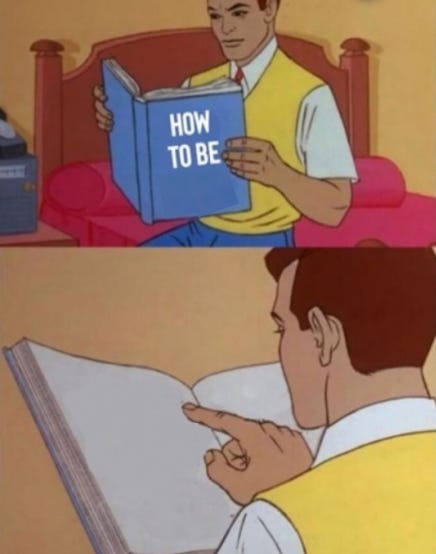
C FOR CON-TENT (CONTENT)
Thank God for content.

Thank God for content. Without you, I’d never know what it means to be content. Content is a word with dual edges and double definitions that are strictly antithetical to each other. Is your cup full, or are you thinking of squandering generational talent for 15 seconds of TikTok fame? When was the last time you were bored? If the answer is never, when was the last time you felt content? In a state of eternal bliss, in the tight gimp suit of the digital womb, we sit wedged between the well-lubricated to and fro of bliss and unsolicited jaw tension. Content is the act of being in a state of peace and happiness, as well as the things that are held or included in something. The substance, or in this instance, the lack thereof. The crusty-bits-in-the-corner-of-your-mouth information made available by a website or other electronic medium. Content, by law of the internet, feeds on the gruel of our undivided attention and lives in place of a slur to crudely pigeonhole notions as complex as art, love and dreams. It’s what a marketing manager screams at their intern about, alongside statistics denoting the correct posting time, its frequency and the colour scheme most likely to fire the pleasure receptors of its recipient. It incites violent pleas of more and more and more, whereas the opposing definition is less and less and less. In the noble words of a high school career counsellor, find what makes you content and follow it to the edge of the earth. To inner peace or pout, that is the burning question.
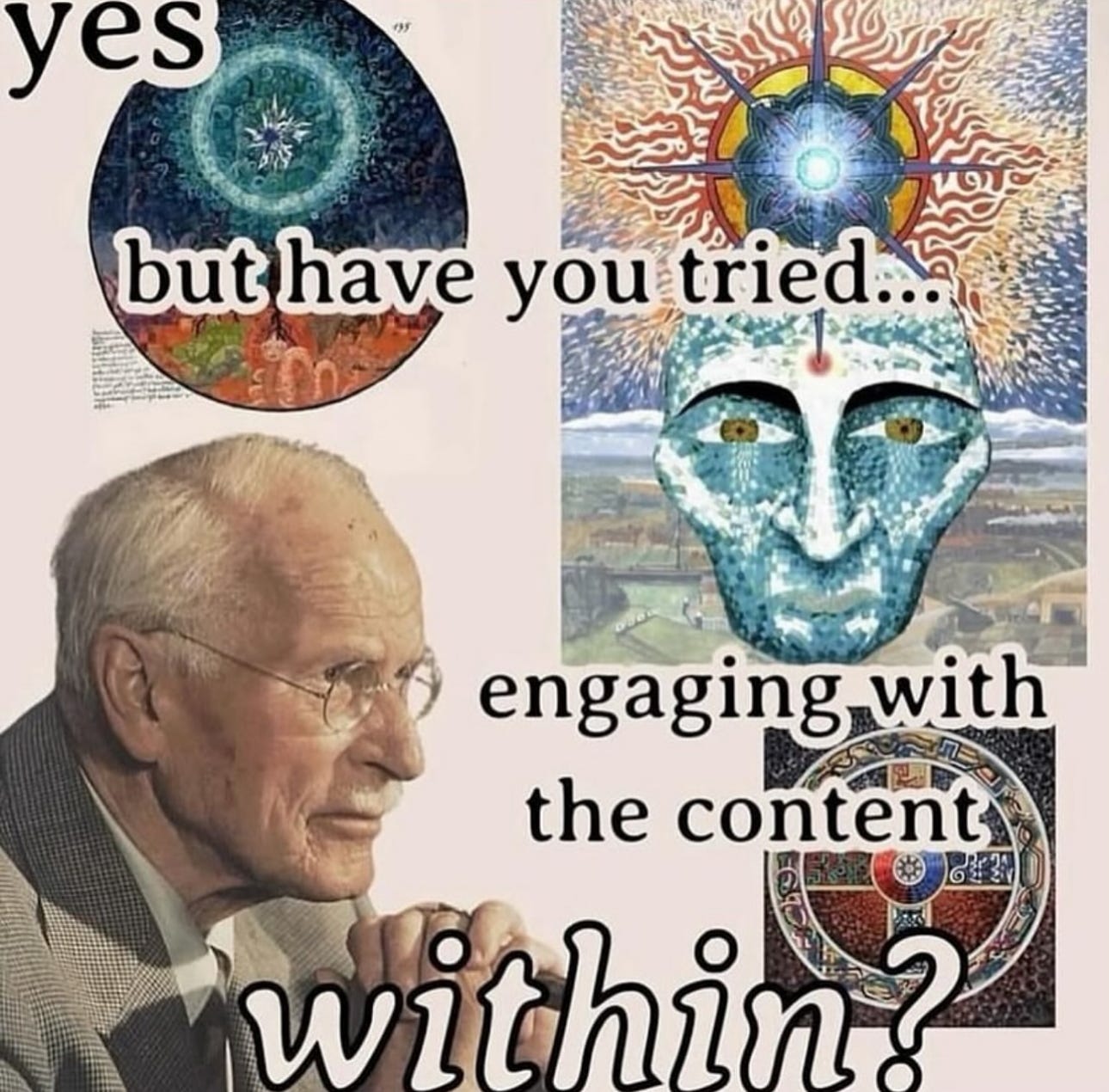
Content is reductive to the pleasure and craft of life’s pursuits. It blows smoke out of its arse, extinguishing the fire within every brave soul who dares to make real their wildest fantasies. The term content can be simply applied to clickbait articles, think pieces, paparazzi tabloid fodder, fine art, poetry, infographics, memes, films, skits, back alley podcasts, portfolios, smutty audiobooks sold on Amazon, classical music and games that don’t even exist, to name a few. The edges of it touch everything we know, painting the world with a smutty brush, no matter how pure, how noble and how profound its seed of thought intended. Content makes us fearful, happy, numb and unproductive all at once. It is a daily homework assigned by the modern world; a task you do so your friends and peers know you exist, and often a necessary evil for a fulfilling professional career. Content is the provocateur of second guesses, leaving you asking what we’ve become, what you value and how you live; it is synthetic and performative, refined and calculated, when all we really want is a bit less. We are content-rich, but contentment-poor. We don’t want to lock in, ghost ride the whip, start a pyramid scheme, bag a milly, get ready with you (GRWM), radicalise into a Twitter (nee X) fascist or learn the lexicons and talking points of manosphere misogyny. We want to have a glorious sleep, and a ceaseless dream. A beautiful night with our deepest thoughts to recalibrate what it truly means to be content, outside of content, void of the barrage of catatonic parasocial pith.
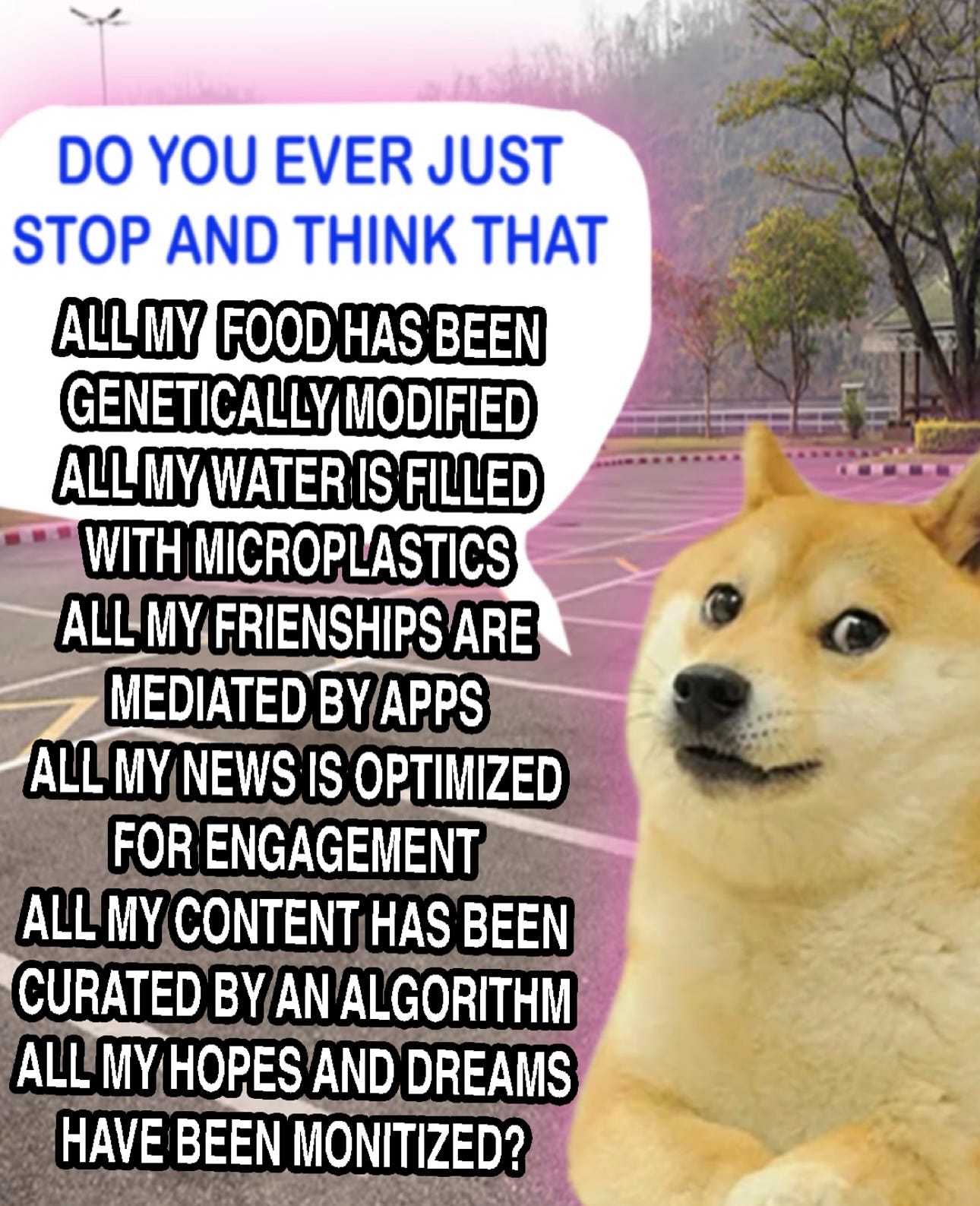
Aware of our easily hijacked biology, Big Tech grows more desperate, and impossibly eager to weaponise all forms of content against us. Its board of directors tires of only being able to report to its investors the profits of stealing our waking lives. In response, it procures an elaborate heist to steal our dreams right from underneath us. Hasta la vista counting sheep. Big Tech sets the grounds for engagement. Battlelines are drawn. Guerrilla warfare is the tactic of choice. Sleep is the enemy, and they’re digging in for winter. Big Tech expertly designs interfaces to trigger dopamine releases, mimicking slot machine mechanics. Features like infinite scroll, autoplay videos, and push notifications create a compulsive pull, making it harder to disengage. A Cold War plays out in the vast data carefully collected: location, search history and emotional cues via facial recognition. These data points draw a portrait of us so deeply accurate that women have begun to find out they’re pregnant through the targeted ads featured on their feeds, over a conventional visit to the doctor. In a masterclass of crunching the numbers, Big Tech creates a feedback loop where content gets more addictive as it learns more about your deepest, darkest and most radioactive desires.
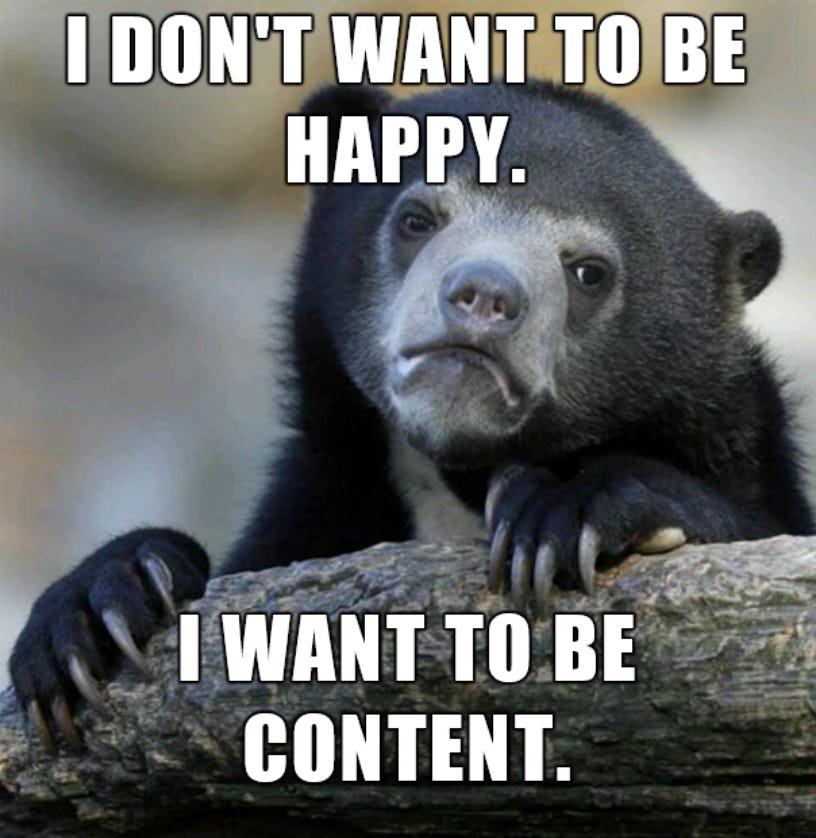
The irony of presenting these opinions and beliefs in the form of what is, in fact, content is not lost. It is knowingly sacrilegious, but in a way that accents the underlying message by how naughty and hypocritical it feels. Content has been explosively wired to feature and celebrate the less challenging parts of our lives. The ones that can be explained easily, erratically, and in a blistering hurry. It’s the plot line mechanics of a Hollywood remake strung out on 20 years of cocaine abuse. A story that glosses the details, slights the negatives with a teflon ectoskeleton, and serves itself up as five-star slop. Are we creating and consuming content to express ourselves, or are we trapped in a system that exploits our attention and need for it? Once wrongfully convicted of being a dangerous form of complacency, content is simply doing less and expecting more from an unscripted life of latent what-ifs. As one content causes you to want, the other content asks us to settle. In a world saturated with content, we are reminded to view content as a warning sign. A prompt telling us to reconsider what truly makes us happy. A humble request to reclaim our contentment somewhere on a leisurely midnight walk along a moonlit boulevard with no destination in mind. To unsubscribe from all the words you never wanted, or needed to hear, and write your own with full creative license and a world of source material at your disposal. To do and show what you want, when you want, without any validation, and just be fine about it.